
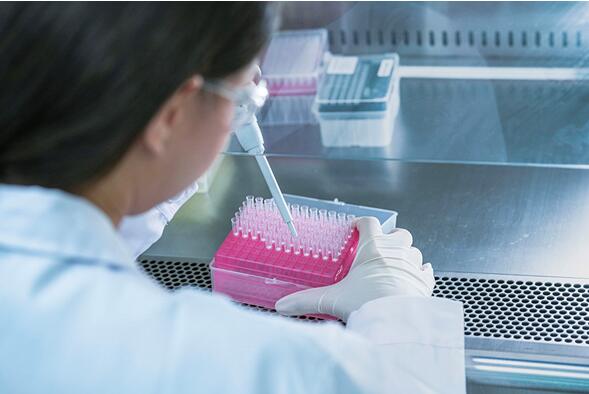
Creative Bioarray provides advanced Tumor Organoid and Immune Cell Co-culture Services to accelerate your immuno-oncology research. By integrating 3D patient-derived tumor organoids (PDOs) with autologous or allogeneic immune cells, we offer a highly translational platform for evaluating immunotherapies, including immune checkpoint inhibitors, CAR-T therapies, and bispecific antibodies.
- Introduction
- Service Details
- Workflow
- Features
- FAQs
Overcoming Immuno-Oncology Translation Gaps
Immuno-oncology has drastically changed the landscape of cancer treatment, yet a significant challenge remains: traditional 2D cell cultures and standard animal models frequently fail to capture the complex human tumor microenvironment (TME) and specific immune cell interactions. This translational gap often leads to poor clinical efficacy for therapies that showed initial promise during preclinical screening.
To address this, our Tumor Organoid and Immune Cell Co-culture platform reconstructs the dynamic interplay between solid tumors and the immune system. By utilizing 3D patient-derived tumor organoids cultured alongside specific immune subsets—such as T cells, Natural Killer (NK) cells, or macrophages—we accurately model immune cell infiltration, tumor-mediated immune evasion, and cytotoxicity. This provides a robust, physiologically relevant human in vitro model tailored for predicting the clinical efficacy of novel immunotherapeutics.
Targeted Co-culture Assay Solutions
Our co-culture services are designed to interrogate specific mechanisms of action, allowing for a comprehensive evaluation of your immuno-oncology candidates:
1. Immune Cell Infiltration & Migration Assays
- Evaluate the ability of effector immune cells (e.g., engineered CAR-T, TCR-T, or endogenous TILs) to navigate the extracellular matrix and actively infiltrate solid tumor organoids.
- Utilize 3D live-cell imaging and confocal microscopy to track immune cell migration dynamics and spatial distribution within the tumor microenvironment in real-time.
- Assess the impact of immunosuppressive factors on immune cell motility and homing.
2. Cytotoxicity & Immune-Mediated Killing
- Quantify specific tumor cell lysis mediated by activated effector immune cells or therapeutic antibodies.
- Distinguish between target (tumor) and effector (immune) cell viability using specific fluorescent reporters and high-content imaging.
- Measure the release of effector molecules, such as granzyme B and perforin, to confirm functional immune cell activation.
3. Immune Checkpoint Inhibitor (ICI) Screening
- Model immune exhaustion and reactivation using autologous PDO and matched peripheral blood mononuclear cell (PBMC) or tumor-infiltrating lymphocyte (TIL) co-cultures.
- Test the efficacy of monoclonal antibodies targeting PD-1/PD-L1, CTLA-4, or emerging novel checkpoints.
- Monitor subsequent T cell proliferation, cytokine secretion profiles (e.g., IFN-γ, TNF-α), and resultant tumor clearance.
Technical Platform and Analytical Approaches
We utilize state-of-the-art technologies to ensure highly sensitive and reproducible data:
Instrumentation:
- Advanced 3D confocal microscopy
- Live-cell kinetic imaging systems
- Multi-color flow cytometers (FACS)
Key Reagents:
- Optimized co-culture media preserving both PDO and immune viability
- Characterized PDO biobanks with varied mutation profiles
- HLA-typed autologous or allogeneic immune cells
Analysis Techniques:
- High-content 3D spatial image analysis
- Multiplex cytokine profiling (ELISA/Luminex)
- Flow cytometric immunophenotyping
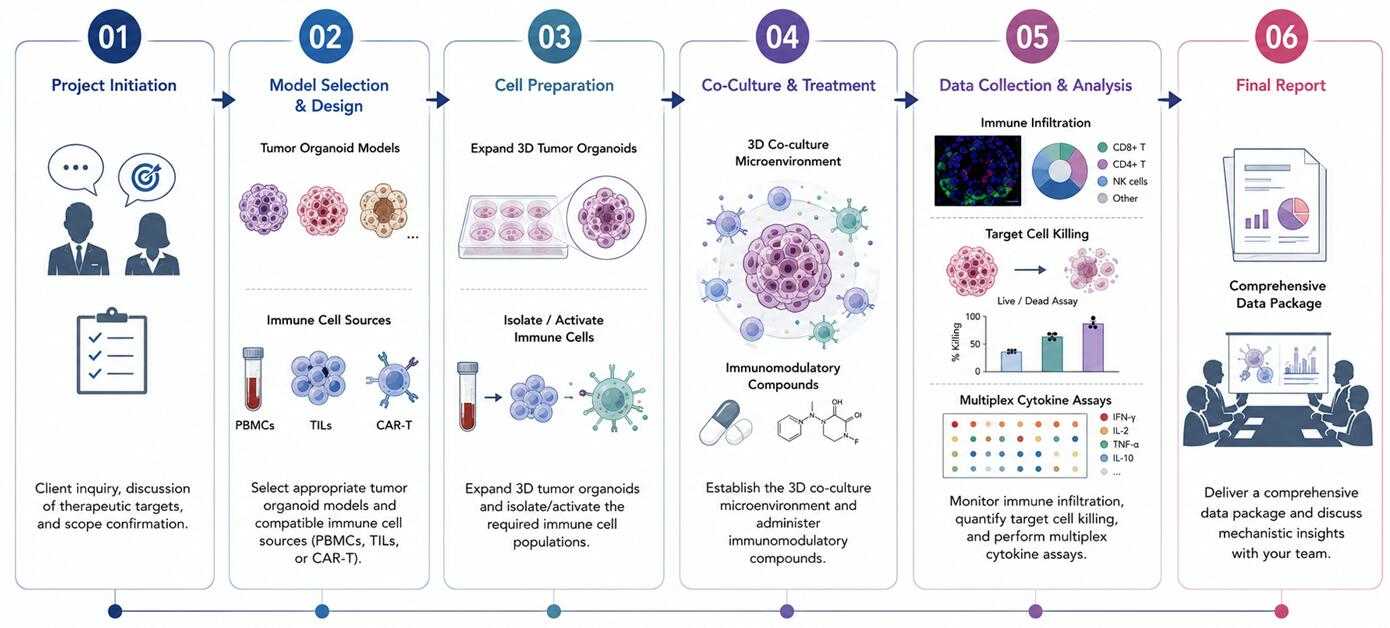
Our Efficient Service Workflow
Our 6-step workflow ensures clarity, stringent quality control, and timely delivery of critical data:
Why Choose Creative Bioarray?
- Highly translational models utilizing clinically relevant, characterized Patient-Derived Organoids (PDOs) and immune cells.
- Preservation of tumor heterogeneity and intrinsic immunosuppressive microenvironments.
- Customizable assay endpoints tailored specifically for CAR-T therapies, bispecific antibodies, and small molecules.
- Comprehensive multi-parametric readouts combining spatial imaging, flow cytometry, and secretome analysis.
Need Support for Your Immuno-Oncology Pipeline?
Navigating the complexities of tumor-immune interactions requires precision and expertise. Our scientific team is ready to help you select the optimal organoid models, immune cell subsets, and analytical endpoints for your specific therapeutic candidates. Let us partner with you to accelerate your immunotherapy development.
FAQs
What types of immunotherapies can be evaluated using this platform?
Our platform is highly versatile, supporting the pre-clinical evaluation of immune checkpoint inhibitors (ICIs), engineered cell therapies (CAR-T, TCR-T, CAR-NK), bispecific T-cell engagers (BiTEs), and macrophage-targeted therapies.
How do you accurately measure tumor cell death vs. immune cell death?
We employ targeted fluorescent reporters alongside specific viability dyes (e.g., cleaved Caspase-3/7). By coupling these with high-content 3D imaging and flow cytometry, we can distinctly quantify the viability and apoptotic state of the target tumor cells versus the effector immune cells.
Can we use our own proprietary engineered cells or compounds?
Absolutely. We routinely integrate client-provided engineered immune cells (like proprietary CAR-T cells), novel biologicals, and small molecule immunomodulators into our validated co-culture workflows under strict confidentiality agreements.
Advance Your Immunotherapy Development Today
Our dedicated team at Creative Bioarray is equipped to help you overcome the translational hurdles of preclinical immuno-oncology testing. Reach out for a consultation, and let’s work together to bring effective immunotherapies to the clinic faster.
Online Inquiry