
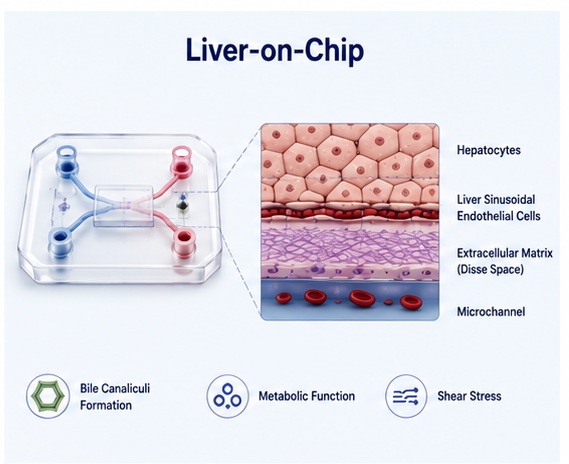
A dynamic microphysiological liver model designed for predictive drug metabolism, hepatotoxicity screening, drug-induced liver injury (DILI) assessment, and liver disease modeling under physiologically relevant flow conditions.
- Overview
- Details
- Advantages
- FAQs
Overview
As the central hub for systemic metabolism and detoxification, the liver is highly vulnerable to chemical stress, making drug-induced liver injury (DILI) a leading cause of clinical attrition in drug development. Accurate prediction of hepatic responses requires in vitro models that maintain robust enzymatic activity, complex cellular cross-talk, and physiological hemodynamics over extended periods.
However, primary hepatocytes rapidly lose their metabolic competence (such as CYP450 expression) in conventional static 2D cultures. Liver-on-Chip addresses this limitation by providing a perfusable, microfluidic environment that preserves long-term hepatocyte functionality and supports the co-culture of non-parenchymal cells, enabling more reliable evaluation of metabolic profiles, toxicity, and liver pathologies.
What Is Liver-on-Chip?
Liver-on-Chip is a microfluidic cell culture device designed to recreate the functional architecture of the hepatic microenvironment. By culturing hepatocytes—often alongside non-parenchymal cells like Kupffer cells, hepatic stellate cells, and liver sinusoidal endothelial cells (LSECs)—under controlled fluid flow, the platform maintains prolonged metabolic activity and cellular polarity.
This chip-based liver model can support the study of:
- Prolonged hepatic metabolic competence and CYP450 activity
- Drug metabolism, clearance, and pharmacokinetic (PK) profiling
- Drug-induced liver injury (DILI) and mechanistic hepatotoxicity
- Complex liver diseases such as NAFLD, NASH, and liver fibrosis
- Hepatobiliary transporter function and biliary efflux
- Real-time imaging and continuous sampling for biomarker detection
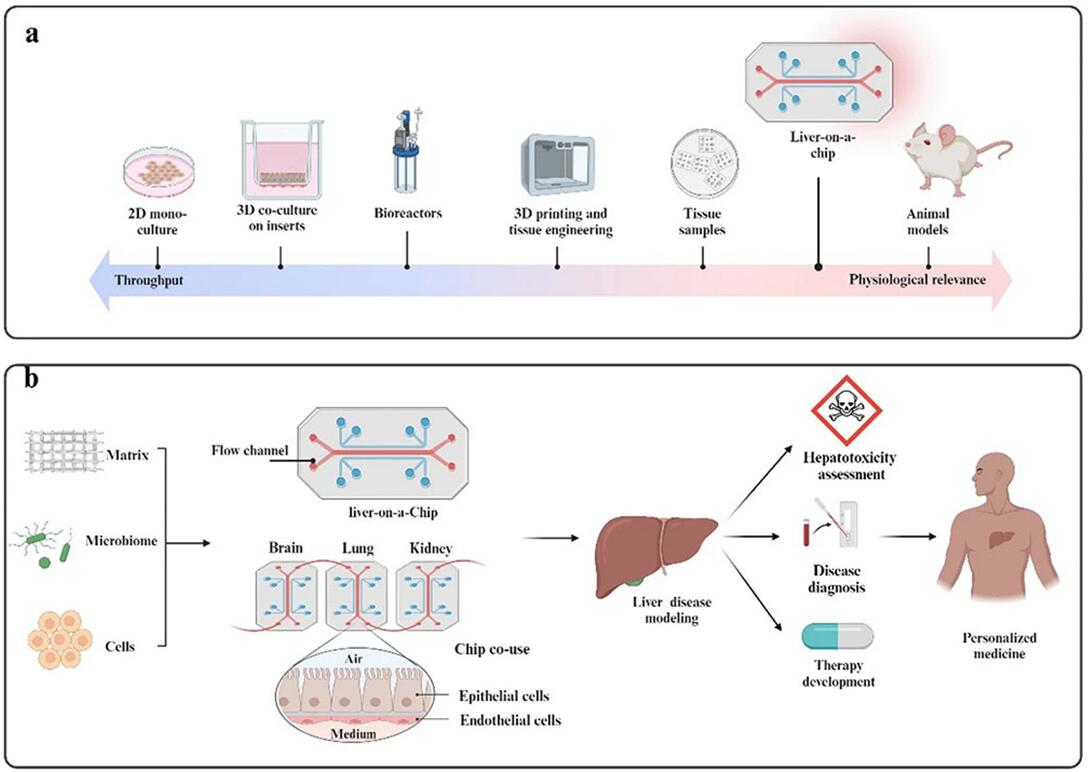 Fig. 1. Schematics of the development and application of LOC (Liu J, Du Y, et al.,
2024).
Fig. 1. Schematics of the development and application of LOC (Liu J, Du Y, et al.,
2024).
Our Liver-on-Chip Platform
Our Liver-on-Chip platform provides a dynamic hepatic model for studying drug metabolism, hepatotoxicity, and complex liver diseases under controlled perfusion.
Key Features
- Prolonged functionality: Maintains stable CYP450 activity and hepatocyte phenotype for extended periods.
- Multicellular co-culture: Supports integration of hepatocytes, Kupffer cells, stellate cells, and LSECs.
- Dynamic perfusion: Mimics hepatic blood flow and physiological shear stress.
- Flexible cell options: Compatible with primary human hepatocytes (PHHs), HepaRG, and iPSC-derived cells.
- Continuous sampling: Enables real-time collection of effluents for metabolite and biomarker detection.
Validation & Readouts
- Hepatic function: Albumin secretion, Urea production, and CYP450 activity assays.
- Toxicity markers: LDH, AST, ALT release, and ROS detection.
- Disease biomarkers: Inflammatory cytokines (e.g., IL-6, TNF-α) and fibrotic markers (e.g., α-SMA, Collagen).
- Downstream analysis: High-content imaging, qPCR, RNA-seq, ELISA, and LC-MS/MS.
Applications
- Hepatotoxicity & DILI: Predict acute, chronic, and immune-mediated drug-induced liver injury.
- Drug Metabolism (DMPK): Evaluate compound clearance, metabolites, and drug-drug interactions.
- Liver Disease Modeling: Build in vitro models of Steatosis, NAFLD, NASH, and liver fibrosis.
- Gene Therapy & Biologics: Assess hepatic uptake and safety of LNPs, AAV vectors, and RNA therapeutics.
FAQs
Q: What cell types are recommended for Liver-on-Chip?
Primary human hepatocytes (PHHs) are the gold standard for metabolism and toxicity studies. However, the platform also supports HepaRG cells, iPSC-derived hepatocytes, and co-cultures with Kupffer cells, hepatic stellate cells, and LSECs depending on the study goals.
Q: Can the chip maintain stable CYP450 activity?
Yes. The dynamic perfusion and 3D-like microenvironment of the Liver-on-Chip help preserve hepatocyte phenotype and CYP450 enzyme activity for weeks, making it ideal for chronic toxicity and repeated dosing studies.
Q: Can Liver-on-Chip be used for DILI testing?
Yes. It is highly predictive for drug-induced liver injury (DILI). By integrating Kupffer cells, the model can also detect immune-mediated hepatotoxicity, which is a major limitation of hepatocyte-only models.
Q: Can it model NASH or liver fibrosis?
Yes. By exposing a co-culture of hepatocytes, stellate cells, and Kupffer cells to free fatty acids (FFAs) or inflammatory stimuli, the platform can successfully model lipid accumulation, inflammation, and fibrotic progression.
Q: What readouts are compatible with this model?
You can perform live-cell imaging, measure secreted biomarkers (Albumin, Urea, LDH, AST/ALT, cytokines) from the effluent, assess CYP450 activity via luminescent assays, and collect cells for qPCR or RNA-seq.
Accelerate your drug discovery and hepatotoxicity assessment with our highly predictive Liver-on-Chip platform.
Contact us today to request product details, pricing, or customized solutions for your liver research.
Online Inquiry