Ready-to-use 3D human hair follicle organoids designed for alopecia research, hair regeneration studies, follicle biology, and cosmetic compound screening
- Overview
- Details
- Advantages
- FAQs
Overview
The human hair follicle is a highly specialized mini-organ responsible for hair growth, cycling, pigmentation, and interactions with the surrounding skin microenvironment. Hair follicle dysfunction is associated with a wide range of conditions including androgenetic alopecia, alopecia areata, chemotherapy-induced hair loss, and age-related hair thinning. Traditional 2D cell cultures and animal models often fail to fully reproduce the complex epithelial-mesenchymal interactions and three-dimensional architecture of human hair follicles.
Hair follicle organoids are advanced 3D human tissue models that recapitulate key structural and functional features of native hair follicles. Generated from human stem cells, dermal papilla cells, keratinocytes, or hair follicle progenitor cells, these organoids support follicular morphogenesis, dermal-epidermal signaling, and hair shaft-like structure formation in a physiologically relevant microenvironment. Hair follicle organoids provide a powerful platform for studying hair biology, regenerative dermatology, disease modeling, and hair growth therapeutics.
What Are Hair Follicle Organoids?
Organoids are self-organizing three-dimensional cellular systems that reproduce important characteristics of native human tissues and organs. Hair follicle organoids specifically mimic several key aspects of human follicle biology, including:
- Hair follicle-like structural organization
- Dermal papilla and epithelial cell interactions
- Hair shaft differentiation and keratinization
- Hair follicle stem cell activity
- Hair growth and cycling-associated signaling pathways
Hair follicle organoids are typically cultured under defined 3D conditions that support follicular maturation and tissue organization, making them highly valuable for translational hair research and cosmetic applications.
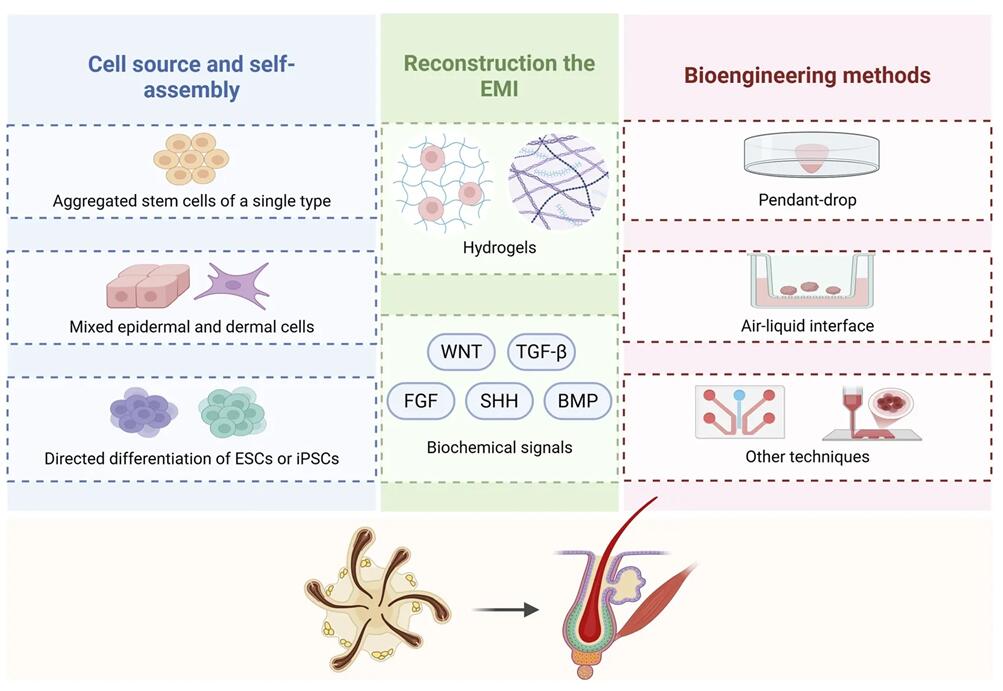 Fig. 1. The main construction strategy of hair follicle organoids (Yao X, Ding R,
et al., 2026).
Fig. 1. The main construction strategy of hair follicle organoids (Yao X, Ding R,
et al., 2026).
Our Ready-to-Use Hair Follicle Organoids
Our hair follicle organoids are high-quality, ready-to-use 3D human follicular models developed using advanced stem cell and organoid culture technologies. These organoids reproduce critical follicular structures and signaling interactions while providing excellent reproducibility and compatibility with downstream analytical applications.
Key Features
- Physiologically relevant follicular microenvironment supporting epithelial-mesenchymal interactions and follicle-like organization
- Functional dermal papilla characteristics with expression of follicle-associated markers and inductive signaling pathways
- Support for hair shaft differentiation and keratinization-associated processes
- Ready-to-use cryopreserved format that minimizes extensive optimization and preparation time
- High reproducibility ensured through standardized manufacturing and quality control procedures
Characterization & Validation
Our hair follicle organoids undergo extensive structural, molecular, and functional validation to ensure biological relevance and experimental consistency.
- Marker expression: SOX9, KRT15, ALP, Versican, LEF1, and β-catenin validated by immunostaining and qPCR
- 3D follicular morphology: Histological analysis confirms follicle-like organization and epithelial-mesenchymal compartmentalization
- Hair differentiation functionality: Evaluation of keratinization and follicular maturation-associated pathways
- Quality control: High post-thaw viability, low batch variability, and mycoplasma-free status
Applications
Our ready-to-use hair follicle organoids support a broad range of dermatology, regenerative medicine, and cosmetic research applications:
- Alopecia Disease Modeling: Study androgenetic alopecia, alopecia areata, chemotherapy-induced hair loss, and age-related follicular dysfunction.
- Hair Regeneration Research: Investigate follicular morphogenesis, stem cell-mediated regeneration, and regenerative dermatology strategies.
- Cosmetic & Compound Screening: Evaluate hair growth-promoting compounds, anti-hair-loss therapeutics, and cosmetic formulations in human-relevant 3D systems.
- Developmental Biology: Analyze epithelial-mesenchymal interactions, follicle induction, and hair cycling mechanisms.
- Drug Discovery: Support screening of novel therapeutics targeting hair growth, inflammation, and follicular regeneration pathways.
Why Choose Our Hair Follicle Organoids
- Human-relevant follicle biology with physiologically meaningful tissue organization and signaling
- Advanced 3D follicular architecture that better recapitulates native hair follicle structure than conventional 2D culture systems
- Ready-to-use platform that reduces experimental preparation and culture optimization time
- Compatible with drug screening and cosmetic testing workflows
- Versatile applications spanning alopecia research, regenerative medicine, developmental biology, and hair therapeutics discovery
FAQs
Q: Are hair follicle organoids suitable for alopecia research?
Yes. Hair follicle organoids provide a physiologically relevant platform for studying multiple forms of hair loss, including androgenetic alopecia, alopecia areata, and therapy-associated follicular damage.
Q: Can the organoids be used for cosmetic ingredient screening?
Yes. Hair follicle organoids are compatible with cosmetic and pharmaceutical compound screening workflows designed to evaluate hair growth, follicular protection, and scalp-related biological responses.
Q: What downstream assays are compatible with hair follicle organoids?
Hair follicle organoids are compatible with immunofluorescence staining, histology, qPCR, RNA sequencing, viability assays, imaging analysis, and drug screening applications.
Q: How are the organoids shipped and recovered?
Hair follicle organoids are shipped cryopreserved on dry ice or in liquid nitrogen vapor phase shipping containers. Optimized thawing and recovery protocols are provided to ensure high post-thaw viability and reproducibility.
Accelerate hair biology, alopecia, and regenerative dermatology research with physiologically relevant human hair follicle organoids.
Contact us today to request product datasheets, pricing information, or customized hair follicle organoid solutions tailored to your research applications.
Online Inquiry