
Accelerate genetic disease research and therapeutic discovery with patient-derived organoids and organ-on-a-chip models, enabling functional analysis of mutations, drug response prediction, and personalized medicine approaches.
- Overview
- Platform
- Service
- Application
- Workflow
- FAQs
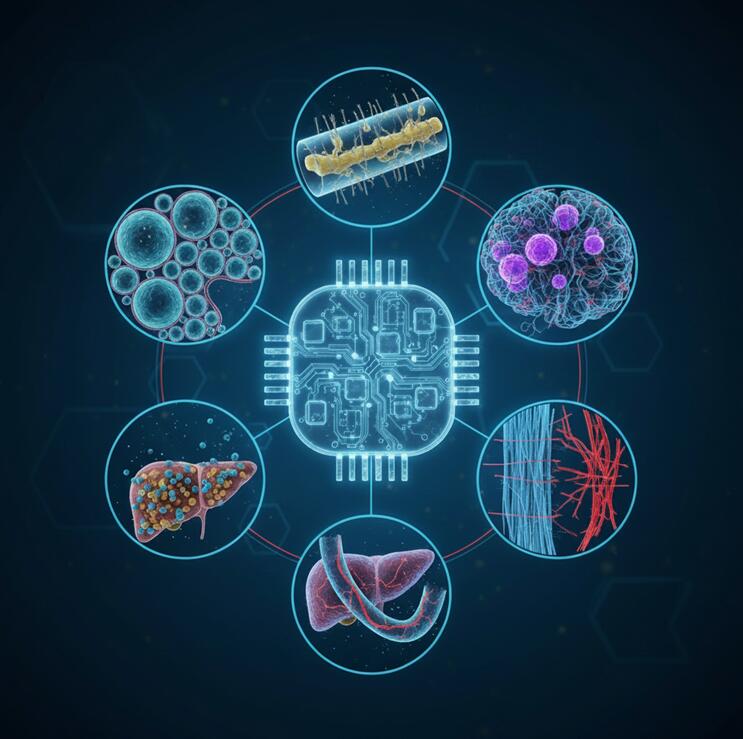
Genetic diseases, spanning monogenic disorders like cystic fibrosis and Duchenne muscular dystrophy to complex polygenic conditions, arise from inherited or de novo mutations that disrupt cellular and organ function. Traditional research models, such as animal models carrying homologous mutations or 2D patient cell lines, have provided foundational insights but often fail to fully capture the human-specific pathophysiology, tissue-level organization, and complex cell-cell interactions that define these diseases in patients. This gap hinders the translation of genetic discoveries into effective therapies.
Patient-derived organoids and organ-on-a-chip systems are revolutionizing genetic disease research. Organoids, grown from patient-derived induced pluripotent stem cells (iPSCs) or primary tissue stem cells, faithfully recapitulate the genetic background and can manifest disease-specific phenotypes in a 3D, tissue-like context. Organ-on-a-chip technology further enhances physiological relevance by integrating dynamic fluid flow, mechanical forces, and multi-tissue interfaces, enabling the study of systemic aspects of genetic disorders and the interaction between genetically altered parenchyma and a wild-type microenvironment.
Comparison of Models for Genetic Disease Research
| Model Type | Genetic Fidelity | Human Physiological Relevance | Throughput for Screening | Ability to Model Multi-organ Interactions |
| 2D Cell Culture (Patient Fibroblasts) | High | Low; lacks 3D tissue architecture and native cell-matrix interactions. | Very High | Nonexistent; isolated cell type analysis. |
| Animal Models (Transgenic/KO) | Variable; species-specific genetic differences exist. | Moderate; useful for systemic physiology but may not mirror human disease mechanisms. | Low | High; expensive and time-consuming. |
| iPSC-Derived 2D Cells | Highest (isogenic patient-specific) | Low to Moderate; cell-type specific but lacks tissue complexity. | High | Low; typically single cell type. |
| Patient-Derived Organoids (PDOs) | Highest | High; maintains patient genetics in a 3D, tissue-like structure. | Medium to High | Moderate; can model multi-cellular interactions within an organ. |
| Organ-on-a-Chip (with Genetic Modifications) | Highest (customizable) | Superior; incorporates human physiology, flow, and mechanical cues. | Medium | Highest; can link multiple "organ" chips to study systemic disease. |
Our Genetic Disease Modeling Platforms: iPSC-Derived Organoids & Multi-organ Chips
We provide a robust suite of platforms centered on patient-specific induced pluripotent stem cells (iPSCs) and genetically engineered organ-on-a-chip systems to model a wide spectrum of inherited and complex genetic disorders.
Key Features:
- Comprehensive iPSC Biobank: Access to a characterized library of iPSC lines from patients with neurological (e.g., Alzheimer's, Parkinson's, ALS), cardiac, hepatic, renal, and muscular genetic disorders.
- Isogenic Control Generation: Gene-editing of specific mutations in control lines to create perfect genetic matches for controlled experiments.
- Diverse Organoid Types: Generate brain, heart, liver, kidney, intestinal, and retinal organoids that exhibit disease-relevant phenotypes (e.g., protein aggregation, electrophysiological defects, metabolic dysfunction).
- Multi-organ Microphysiological Systems (MPS): Connect different disease-relevant organ chips (e.g., liver-kidney, gut-brain axis) to study metabolite toxicity, drug pharmacokinetics/pharmacodynamics (PK/PD), and systemic manifestations.
- Phenotypic & Functional Readouts: Integrated high-content imaging, electrophysiology (MEA, patch clamp), and metabolomics for deep molecular and functional characterization.
Genetic Disease Research and Therapy Development Services
Leveraging our advanced organoid and organ-chip platforms, we offer tailored services to support every stage of genetic disease research and therapeutic development:
- Disease Modeling & Phenotypic Screening: Establish and characterize organoid models of your genetic disease of interest, followed by high-content screening to identify morphological, functional, or molecular phenotypes for drug discovery.
- Drug Repurposing & Novel Therapy Testing: Screen FDA-approved libraries or novel compounds (small molecules, ASOs, gene therapy vectors) in disease organoids to assess efficacy and rescue of disease phenotypes.
- Personalized Medicine & Therapy Prediction: Use patient-derived organoids as "avatars" to predict individual response to existing or investigational therapies, guiding clinical trial enrollment and treatment decisions.
- Preclinical Safety & Efficacy in MPS: Evaluate lead therapeutic candidates for on-target efficacy and off-target organ toxicity using interconnected organ-on-a-chip systems that model human absorption, distribution, metabolism, and excretion (ADME).
Core Applications in Genetic Disorder Research
Patient iPSC-Derived Organoids
- Neurological Disorders: Model Alzheimer's disease (amyloid/tau pathology), Parkinson's (α-synuclein aggregation), autism spectrum disorders (neuronal network dysfunction), and epilepsy using cortical, midbrain, or assembloid (brain region fused) models.
- Monogenic Metabolic Diseases: Study diseases like Cystic Fibrosis (CFTR function in airway/intestinal organoids), Wilson's Disease (copper metabolism in liver organoids), and Glycogen Storage Diseases.
- Genetic Cardiomyopathies: Create heart organoids or engineered heart tissues from patients with hypertrophic cardiomyopathy (HCM) or long QT syndrome to assess contractile abnormalities and drug-induced arrhythmogenicity.
Organ-on-a-Chip for Systemic & Complex Genetics
- Blood-Brain Barrier (BBB) & Drug Delivery: Model a patient-specific BBB on-a-chip to study the penetration of gene therapies (e.g., ASOs, AAVs) for neurological diseases and test strategies to enhance delivery.
- Multi-organ PK/PD & Toxicity: Connect a "diseased liver" chip (with a specific metabolic enzyme mutation) to a "heart" or "kidney" chip to predict how altered drug metabolism leads to systemic toxicity or variable efficacy.
- Complex Disease Interplay: Model the gut-brain-liver axis in the context of genetic predispositions to conditions like Parkinson's disease or autoimmune disorders, incorporating immune cell interactions.
Workflow for Genetic Disease Modeling & Screening
Patient Cell Sourcing & iPSC Generation
Derive iPSCs from patient fibroblasts/blood or utilize biobanked lines. Generate isogenic control lines via gene editing.
Organoid Differentiation & Maturation
Differentiate iPSCs into disease-relevant organoids (brain, heart, liver, etc .) using optimized protocols to recapitulate mature cell types and tissue architecture.
Phenotypic Validation & Characterization
Rigorously validate models via genomics (sequencing), transcriptomics, proteomics, and functional assays to confirm disease-specific phenotypes.
Assay Development & Screening
Develop high-content imaging, electrophysiological, or biochemical assays to quantify disease phenotypes. Proceed with compound or genetic screening.
Data Analysis & Therapeutic Insights
Advanced bioinformatics and systems biology analysis to identify hit compounds, elucidate mechanisms of action, and nominate biomarkers for further development.
FAQs
What is the advantage of using iPSC-derived organoids over animal models for genetic diseases?
iPSC-derived organoids provide a human genetic background in a human tissue context, overcoming species-specific differences that often limit the translational relevance of animal models. They allow for the study of patient-specific mutations, variable penetrance, and personalized drug response in a dish.
What genetic diseases are currently supported by your platform?
We have established protocols and/or iPSC lines for a wide range, including but not limited to:
- Neurological: Alzheimer's, Parkinson's, Huntington's, ALS, Fragile X, Rett Syndrome.
- Cardiac: Hypertrophic Cardiomyopathy, Long QT Syndrome.
- Metabolic/Liver: Cystic Fibrosis, Alpha-1 Antitrypsin Deficiency, Wilson's Disease.
- Renal: Polycystic Kidney Disease (PKD).
Contact us to discuss your specific disease of interest.
How can multi-organ chips aid in developing therapies for genetic diseases?
Multi-organ chips (MPS) are crucial for therapies that have systemic effects or potential off-target toxicity. For example, they can model:
- The liver metabolism of a prodrug and its active metabolite's effect on a diseased heart chip.
- The distribution and efficacy of a gene therapy vector from a gut chip to a brain chip via a vascular channel.
- This provides a more holistic, human-relevant preclinical safety and efficacy profile before animal or human trials.
Online Inquiry