
Creative Bioarray offers a comprehensive Organ-on-a-chip development service, supporting pharmaceutical and biotechnology companies with custom Organ-on-a-chip model development for drug screening, toxicity studies, and disease modeling.
- Background
- Service Details
- Workflow
- Features
- FAQs
Organ-on-Chip Development Service Overview
Drug development during preclinical studies utilizes experimental models that aim to determine product safety and efficacy. Animal models and two-dimensional cell cultures commonly lack the physiological relevance that is needed for accurate translational predictions.
Organ-on-a-chip systems are microfluidic cell culture devices that contain living human cells and closely mimic the physiological microenvironment of native tissues. These platforms recreate mechanical and biochemical characteristics found in vivo including flow, tissue–tissue interfaces, and complex biochemical signaling.
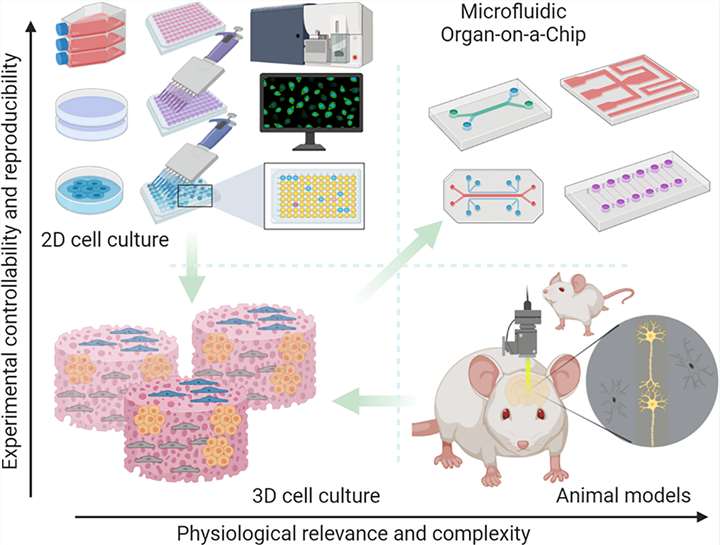 Fig. 1. Microfluidic Organ-on-a-Chip platform (Ma C, et al., 2021).
Creative Bioarray is an Organ-on-a-chip CRO that designs microphysiological systems for scientists looking to develop highly physiologically relevant drug discovery models. We combine microengineering, cell biology, and high-tech analytics to build custom Organ-on-a-chip systems.
Our services support pharmaceutical companies, biotechnology startups, and academic research groups seeking reliable and scalable platforms for Organ-on-a-chip model development.
Custom Organ-on-a-chip Model Development Modules
Creative Bioarray provides modular Organ-on-a-chip development services that enable the design and validation of advanced microphysiological systems for diverse biomedical applications.
Microfluidic Chip Engineering for Organ-on-a-chip Systems
Microfluidic design plays a critical role in the functionality of Organ-on-a-chip systems. Our engineering team develops customized chip architectures capable of controlling fluid flow, shear stress, and nutrient gradients.
Capabilities include:
- Microfluidic channel design and fabrication
- Compartmentalized tissue culture chambers
- Integrated porous membrane systems
- Perfusion-controlled microenvironment modeling
Human Cell-Based Tissue Modeling
The biological relevance of an Organ-on-a-chip system depends on the quality of the cellular model. Creative Bioarray develops tissue constructs using well-characterized human cell sources, including:
- Primary human cells
- Induced pluripotent stem cells (iPSCs)
- Immortalized cell lines
- Patient-derived samples
Using optimized 3D culture systems and co-culture strategies, we generate functional tissue models that closely resemble in vivo physiological conditions.
Supported organ models include:
- Liver-on-chip systems
- Lung-on-chip systems
- Kidney-on-chip systems
- Intestine-on-chip systems
- Heart-on-chip platforms
- Blood-brain barrier models
These systems can be customized for specific research applications.
Functional Assay Development on Organ-on-a-chip Platforms
To evaluate biological activity within the chip environment, we develop quantitative assays tailored to each model system.
Common assay types include:
- Drug metabolism studies
- Toxicity evaluation
- Barrier integrity assays
- Cytokine and biomarker analysis
- Cell viability and functional imaging
Disease Modeling and Drug Screening
Organ-on-a-chip platforms can replicate disease-specific tissue conditions, enabling mechanistic studies and therapeutic evaluation.
Creative Bioarray supports the development of disease models such as:
- Liver fibrosis models
- Tumor microenvironment systems
- Neuroinflammation models
- Intestinal inflammatory disease models
Organ-on-a-chip Development Service Workflow
Creative Bioarray follows a streamlined workflow to ensure efficient project execution.
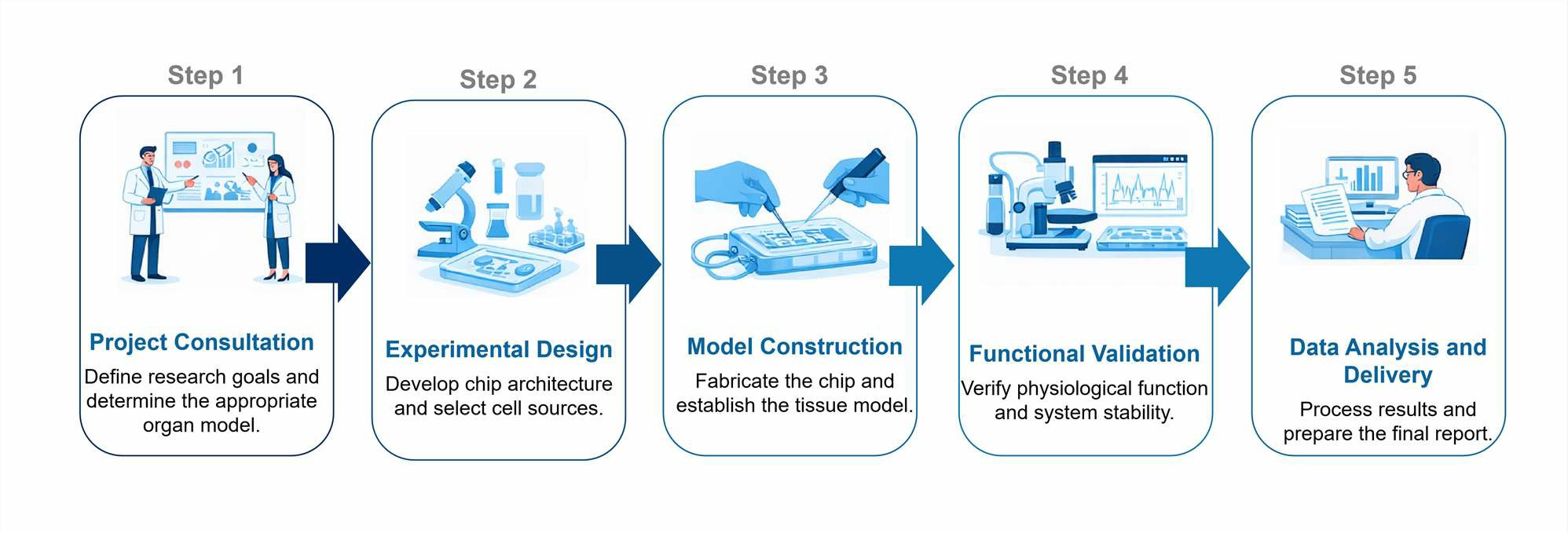 Each stage includes quality control checkpoints to ensure experimental reliability.
Technical Support and Customization
Every research project has unique experimental requirements. Creative Bioarray provides flexible consultation services to ensure that each Organ-on-a-chip development service project is tailored to the client's scientific goals.
Our experts can customize:
- Microfluidic chip design
- Cell type selection
- Tissue architecture
- Drug testing strategies
- Analytical endpoints
Advantages of Our Organ-on-a-chip CRO Services
- Dynamic Organ-on-a-chip microenvironments
- Human-relevant microphysiological systems
- Fully custom Organ-on-a-chip model development
- Integrated bioinformatics and biological analysis
- Flexible and scalable Organ-on-a-chip CRO solutions
FAQs
What types of organ models can you develop?
We have experience with liver, lung, intestine, kidney, heart, brain barrier and tumor microenvironment models.
What types of cells can I incorporate into the chip?
We can work with primary cells, stem-cell derived tissue models, immortalized cell lines, and patient derived samples.
What is the turnaround time for a project?
The timeline of your project will vary on the complexity of your model. Typical Organ-on-a-chip models can be developed in as little as 4-8 weeks. Complex disease models may require additional optimization.
Can the platform be used for drug toxicity testing?
Yes. Our Organ-on-a-chip CRO services are frequently used for toxicity assessment, pharmacokinetic studies, and efficacy evaluation in drug discovery programs.
Can the system support multi-organ studies?
Yes. We can design integrated multi-organ microphysiological systems that allow researchers to study inter-organ interactions and systemic drug responses.
Start Your Organ-on-a-chip Project
If you are interested in developing a custom Organ-on-a-chip model or exploring how this technology can enhance your research program, our experts are ready to help.
Submit your project inquiry today. Our experts will respond within 24 hours.
Reference
- Ma C, Peng Y, et al. Organ-on-a-Chip: A New Paradigm for Drug Development. Trends Pharmacol Sci. 2021 Feb;42(2):119-133.
Online Inquiry