
Creative Bioarray specializes in Cardiotoxicity Research Services, utilizing advanced organ-on-a-chip and organoid technologies to assess the safety of drug candidates on cardiac health. Our innovative models allow researchers to investigate the potential for drug-induced cardiac toxicity early in the development process, ensuring better outcomes for patients.
- Introduction
- Service Details
- Workflow
- Features
- FAQs
Understanding Cardiotoxicity
Cardiotoxicity is a major concern in drug development, particularly for compounds that can adversely affect cardiac function. Traditional animal models often fail to accurately predict cardiotoxic effects in humans, emphasizing the need for more relevant and reliable assessment methods. Cardiotoxicity can arise from a variety of mechanisms, including mitochondrial dysfunction, oxidative stress, and direct damage to cardiac myocytes, leading to potential arrhythmias and heart failure.
Our organ-on-a-chip and organoid technologies simulate human cardiac microenvironments, enabling researchers to replicate the complex interactions between cardiac cells and assess the safety profiles of new drug candidates. By utilizing human pluripotent stem cell-derived cardiomyocytes within our models, we can explore drug responses under conditions that closely mimic in vivo scenarios, allowing for a more accurate prediction of potential cardiac risks.
This detailed understanding of cardiotoxicity mechanisms not only aids in identifying harmful compounds early in the development process but also helps in understanding the broader implications of drug interactions, paving the way for the design of safer therapeutic agents that minimize cardiac side effects.
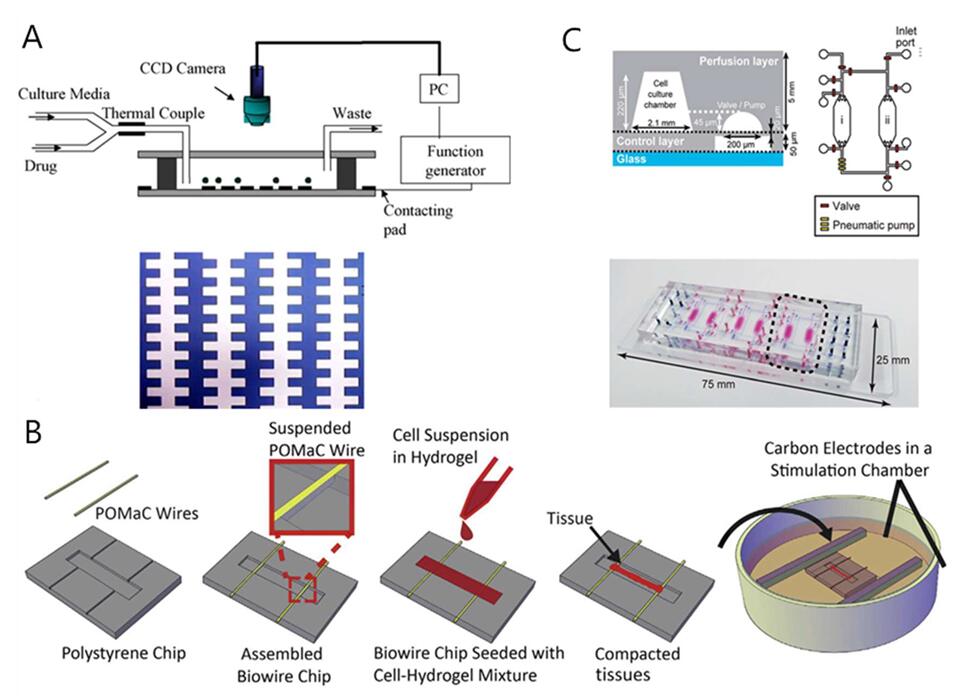 Fig. 1. A heart chip system for drug toxicity testing (Cong Y, Han X, et al.,
2022).
Fig. 1. A heart chip system for drug toxicity testing (Cong Y, Han X, et al.,
2022).
Comprehensive Cardiotoxicity Services
Our Cardiotoxicity Research Services include a variety of solutions tailored to meet the needs of pharmaceutical and biotechnology companies:
1. In Vitro Cardiotoxicity Screening
- Utilizing organ-on-a-chip systems to perform detailed cardiotoxicity assessments for various compounds.
- High-throughput screening facilitates simultaneous evaluation of multiple drug candidates.
- Real-time monitoring of cardiac cell responses enhances sensitivity in toxicity assessments.
2. Mechanistic Insights into Cardiotoxicity
- Investigate the molecular mechanisms underlying drug-induced cardiac toxicity.
- Integrate biomarker analysis to understand vital signaling pathways affected by compounds.
- Utilize imaging techniques to visualize cellular responses to drug exposure over time.
3. Custom Assay Development for Cardiotoxicity
- Develop tailored assays that align with specific research goals related to cardiac safety.
- Collaborate closely with clients to adapt methodologies and ensure relevance to their compounds.
- Leverage patient-derived models for more accurate predictions of cardiac responses.
Technical Platform and Analytical Approaches
We utilize advanced technologies to ensure reliable data:
Instrumentation:
- Microfluidic systems for cardiac studies
- High-throughput screening platforms
- Live-cell imaging for dynamic observation
Key Reagents:
- Specialized culture media for cardiomyocytes
- Standardized ECM components
- Validated biomarker panels for cardiac health
Analysis Techniques:
- Functional assays for cardiac assessment
- Biomarker quantification
- High-Content imaging for cellular analysis
Our Efficient Service Workflow
We ensure a seamless process with clear communication and high-quality results:
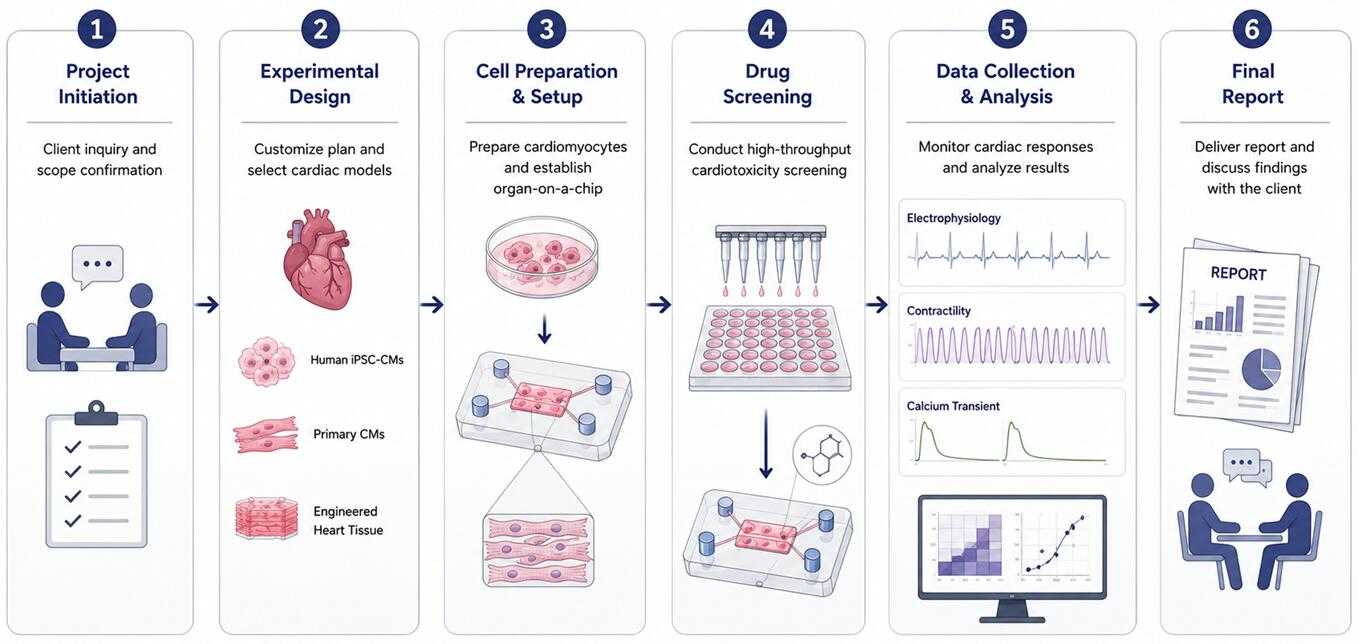 Through each stage, we implement quality checks and gather client feedback, aligning our
work with your objectives.
Through each stage, we implement quality checks and gather client feedback, aligning our
work with your objectives.
Why Choose Creative Bioarray for Cardiotoxicity Research?
- Innovative models that replicate human cardiac physiology for accurate toxicity assessment
- Established methodologies ensure reproducibility of outcomes
- Adaptive service tailored to your specific research needs
- Timely updates and transparent communication throughout the project
Ready to Enhance Your Cardiotoxicity Research? Contact Us!
At Creative Bioarray, we are committed to supporting your cardiotoxicity research initiatives. Our team is here to help you design the right experimental framework to achieve your objectives effectively. Let's collaborate to advance drug safety through innovative science.
FAQs
What types of drugs can be evaluated for cardiotoxicity?
We can assess a wide variety of therapeutic agents, including small molecules, biologics, and compounds in development, to evaluate their potential cardiac effects.
How do you ensure the relevance of the cardiac models?
Our models are developed using patient-derived cells and induced pluripotent stem cells (iPSCs) to closely replicate human cardiac physiology and responses.
What is the typical timeframe for receiving cardiotoxicity results?
Results are generally available within 4–8 weeks following the initiation of the study, depending on its complexity and specific objectives.
How does your workflow accommodate client input?
We prioritize transparent communication and regularly update clients on progress, allowing for feedback and adjustments to ensure the project aligns with your expectations.
Transform Your Cardiotoxicity Research Today
Our dedicated team at Creative Bioarray is here to assist you in advancing your cardiotoxicity research. Reach out for a consultation and let’s work together to ensure safer drug development.
Online Inquiry