Accelerate inflammatory disease research with patient-derived organoids and organ-on-a-chip platforms for barrier function analysis, immune response modeling, and therapeutic discovery.
- Overview
- Platform
- Service
- Application
- Workflow
- FAQs
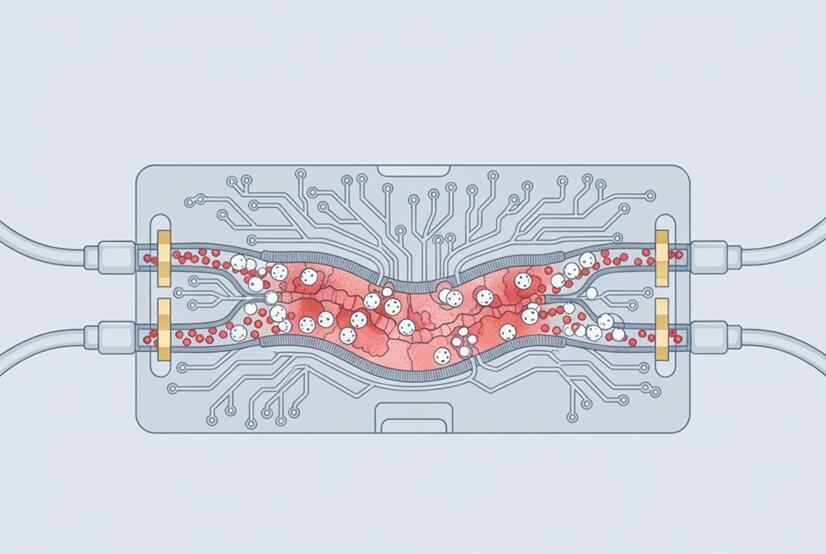
Inflammatory diseases, such as Inflammatory Bowel Disease (IBD), Rheumatoid Arthritis (RA), and Chronic Obstructive Pulmonary Disease (COPD), involve complex interactions between epithelial barriers, circulating immune cells, and the microbiome. These conditions are often chronic and characterized by tissue remodeling and systemic immune activation.
Traditional models often fail to capture the human-specific immune signaling and the physical forces (like gut peristalsis or lung expansion) critical to disease progression. Organoids and Organ-on-a-Chip systems are bridging this gap. Organoids allow for the study of patient-specific epithelial defects, while Organ-on-a-Chip platforms integrate vascular flow and mechanical cues to model the dynamic recruitment of immune cells to inflamed tissues.
Comparison of Inflammatory Disease Models
| Model Type | Barrier & Mucosal Function | Immune Cell Recruitment | Microbiome/Cytokine Flux | Inflammatory Pathophysiology |
| 2D Static Culture | Minimal; no polarized barrier. | None; lacks vascular flow. | Poor; static environment. | Low; cannot model complex tissue-level inflammation. |
| Animal Models (e.g., DSS/OVA-induced) | Moderate; species-specific differences. | High; but involves non-human immune pathways. | Limited; different microbial flora. | Moderate; systemic response but often lacks human-specific targets. |
| Inflammatory Organoids (PDOs) | High; captures patient-specific epithelial defects. | Moderate; requires manual immune integration. | High; enables luminal microbial interaction. | Excellent; maintains genetic predisposition (e.g., IBD-linked mutations). |
| Inflammation-on-a-Chip (OoC) | Highest; includes mechanical strain and TEER monitoring. | Highest; simulates dynamic leukocyte extravasation under flow. | Highest; integrates oxygen gradients and fluid shear stress. | Superior; recapitulates the complete epithelial-immune-vascular axis. |
Our Inflammatory Disease Organoid and Organ-Chip Platforms
We offer a robust suite of models designed to simulate the epithelial-immune interface across multiple organ systems.
Key Features:
- Organ-Specific Models: Gut (IBD), Lung (Asthma/COPD), Skin (Psoriasis), and Synovium (Arthritis).
- Barrier Integrity Monitoring: Real-time TEER measurement to assess "leaky" barrier phenotypes.
- Immune Integration: Co-culture with PBMCs, macrophages, or neutrophils under flow conditions.
- Microbiome Integration: Capability to introduce anaerobic bacterial communities in gut-on-a-chip.
- Dynamic Stimulation: Programmable cyclic stretching and fluid shear stress.
Inflammatory Disease Research Services
Leveraging our advanced microphysiological systems, we provide comprehensive services for anti-inflammatory drug discovery:
- Barrier Repair Assays: Testing compounds that enhance mucosal or epidermal healing.
- Cytokine Storm Profiling: Measuring pro-inflammatory cytokine release in response to stimuli.
- Immune Cell Trafficking: Quantifying the adhesion and transmigration of leukocytes.
- Target Discovery: Identifying novel pathways in patient-specific inflammatory backgrounds.
- Multi-Organ Axis Modeling: Studying the Gut-Liver or Gut-Brain axis in systemic inflammation.
Core Applications in Inflammation Research
Patient-Derived Organoids (PDOs)
- Personalized Medicine: Screening biologicals (e.g., anti-TNF, anti-integrins) on patient-derived gut organoids to predict clinical response.
- Epithelial Stem Cell Research: Investigating how chronic inflammation exhausts the regenerative capacity of tissue-specific stem cells.
- Genetic Screening: Utilizing gene-editing to study the role of risk alleles (e.g., NOD2, ATG16L1) in inflammatory pathogenesis.
Organ-on-a-Chip Systems
- Vascular-Immune Interface: Simulating the rolling, adhesion, and emigration of immune cells from the bloodstream into inflamed tissue.
- Inhaled Therapeutic Testing: Modeling the deposition of aerosols and their effect on the alveolar-capillary barrier in COPD/COVID-19 models.
- Nutrient & Microbiota Interaction: Observing how microbial metabolites (SCFAs) modulate intestinal inflammation.
Workflow
Biopsy/Cell Sourcing
Procurement of patient-derived tissues or specialized primary cells (epithelial/endothelial).
Model Construction
Establishment of 3D organoids or seeding chips to form functional tissue layers.
Inflammation Induction
Application of pro-inflammatory triggers (Cytokine cocktails, LPS, or mechanical stress).
Drug Treatment
Testing of small molecules, antibodies, or cell therapies within the inflamed microenvironment.
Functional Analysis
Comprehensive reporting on barrier integrity, cytokine profiles, and tissue morphology.
FAQs
Can these models simulate the chronic nature of inflammatory diseases?
Yes. Our platforms support long-term culture (weeks to months), allowing for the study of chronic processes like tissue fibrosis and epithelial-to-mesenchymal transition (EMT).
How do you verify barrier function in a chip?
We utilize integrated electrodes for continuous Trans-Epithelial Electrical Resistance (TEER) monitoring and fluorescent tracer permeability assays (e.g., FITC-dextran) to assess barrier "leakiness."
Can I use my own patient-derived cells in your chip system?
Absolutely. We offer a "transfer and integrate" service where we can adapt your specific cell lines or patient-derived organoids into our microfluidic chip architectures.
Are these models suitable for testing microbiome-based therapies?
Yes. Our gut-on-a-chip platforms can maintain oxygen gradients, allowing anaerobic bacteria to coexist with aerobic human cells, perfect for probiotic or postbiotic testing.
Online Inquiry