Ready-to-use 3D human brain organoids derived from hiPSCs, designed for neuroscience research, disease modeling, neurotoxicity assessment, and CNS drug discovery.
- Overview
- Details
- Advantages
- FAQs
Overview
The brain is one of the most physically and functionally complicated organs in the human body. Traditional research models such as 2D neuronal cultures and animal models have limitations in their ability to reproduce the cellular heterogeneity, tissue organization, and developmental processes of the human central nervous system. Brain organoids are a sophisticated in vitro platform that better recapitulate important features of human neurodevelopment and neurological disease biology.
Brain organoids are 3D multicellular neural tissues derived from human induced pluripotent stem cells (hiPSCs). Under prescribed culture conditions, stem cells self-organized into neural structures resembling the forebrain, midbrain, and cortical-like tissues of the developing human brain. These organoids comprise several brain cell populations and recapitulate critical aspects of neuronal development , organization and network building.
What Are Brain Organoids?
Brain organoids are three-dimensional neural structures that self-organize and imitate significant structural and functional aspects of the human brain. Depending on the differentiation process, brain organoids can recapitulate the development of the whole brain or specific brain areas.
- 3D neural tissue organization
- Neural progenitor and neuronal populations
- Astrocyte and glial cell differentiation
- Region-specific brain patterning
- Neural network formation and spontaneous activity
- Long-term culture capability
Compared with conventional 2D neuronal cultures, brain organoids provide improved cell-cell interactions, extracellular microenvironment complexity, and physiologically relevant tissue architecture, making them valuable tools for translational neuroscience research.
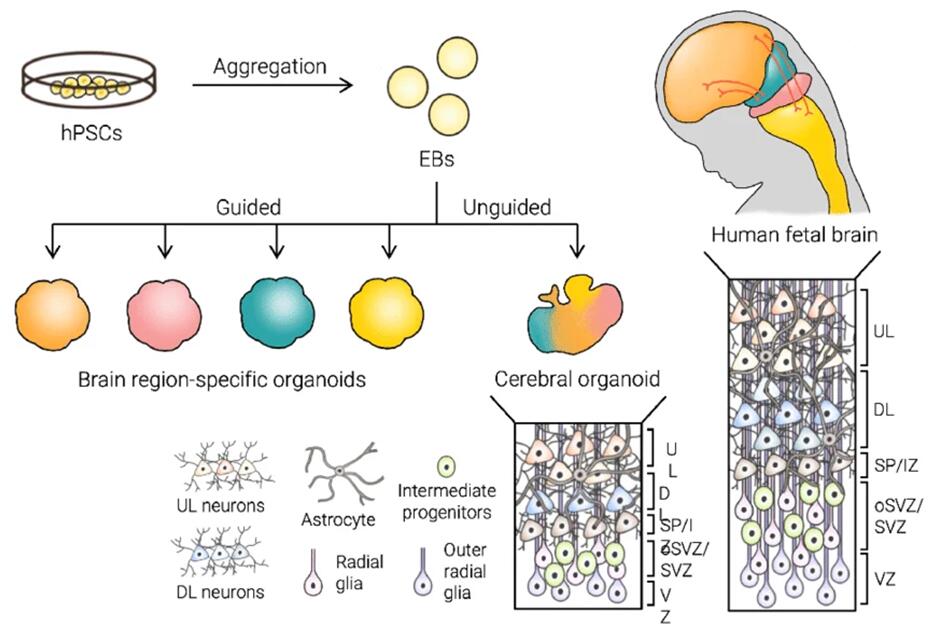 Fig. 1. Generation of brain organoids (Jang H, Kim S H, et al., 2022).
Our Ready-to-Use Brain Organoids
Our brain organoids are generated from well-characterized human induced pluripotent stem cells using optimized 3D differentiation protocols. These organoids provide reproducible, physiologically relevant neural models suitable for neuroscience research, disease modeling, and CNS drug development.
Key Features
- Human-relevant neural model. Recapitulates important features of early human brain development and neural tissue organization.
- Region-specific differentiation. Available as cerebral, cortical, forebrain, or midbrain organoid models.
- Multiple neural cell populations. Contains neural progenitors, neurons, and glial lineage cells.
- Functional neural activity. Supports neural maturation and spontaneous electrophysiological activity.
- Ready-to-use format. Cryopreserved organoids with optimized recovery protocols reduce weeks of differentiation time.
- Batch consistency. Manufactured under standardized conditions with rigorous quality control.
Characterization & Validation
Our brain organoids undergo comprehensive molecular, structural, and functional validation to ensure reproducibility and biological relevance.
- Neural markers: Expression of SOX2, Nestin, TUJ1, MAP2, GFAP, and region-specific neural markers confirmed by immunostaining and qPCR.
- 3D morphology: Organized neural structures with ventricular-like zones and neural rosette formation.
- Neural functionality: Assessment of spontaneous calcium signaling and electrophysiological activity.
- Quality control: High post-thaw viability, sterility testing, and batch reproducibility evaluation.
Applications
Our ready-to-use brain organoids support a wide range of neuroscience and translational research applications.
- Neurological Disease Modeling: Study neurodevelopmental and neurodegenerative disorders including Alzheimer's disease, Parkinson's disease, autism spectrum disorders, epilepsy, and microcephaly.
- CNS Drug Discovery: Evaluate compound efficacy, neurotoxicity, blood-brain barrier penetration potential, and therapeutic responses in human-relevant neural systems.
- Neurodevelopment Research: Investigate neural differentiation, cortical organization, synapse formation, and neuronal maturation.
- Host-Pathogen Interaction: Study neurotropic viral infections and inflammatory responses in neural tissue models.
Why Choose Our Brain Organoids
- Physiologically relevant 3D neural microenvironment compared with conventional 2D cultures
- Human-derived models that reduce species-related limitations associated with animal systems
- Ready-to-use cryopreserved format saves significant differentiation time
- Reproducible production with standardized quality control procedures
- Versatile platform for disease modeling, neurotoxicity testing, and drug discovery
- Long-term culture compatibility for neural maturation and chronic exposure studies
- Scalable workflows compatible with imaging, omics analysis, and high-content screening
FAQs
Q: How are the brain organoids shipped?
Brain organoids are supplied as cryopreserved samples and shipped on dry ice or in liquid nitrogen vapor shippers to maintain viability and structural integrity during transportation.
Q: What cell types are present in the brain organoids?
Depending on the differentiation protocol and maturation stage, brain organoids may contain neural progenitor cells, mature neurons, astrocytes, and other neural lineage cells relevant to specific brain regions.
Q: Can brain organoids be cultured long-term?
Yes. Under optimized culture conditions, brain organoids can be maintained for extended periods to support neuronal maturation and long-term experimental studies.
Q: Are patient-specific or disease-specific brain organoids available?
We are developing customized disease-specific and gene-edited brain organoid models based on customer research requirements. Please contact us for additional information regarding available options.
Accelerate your neuroscience research with physiologically relevant human brain organoids.
Contact us today to request detailed product information, technical support, or customized brain organoid solutions tailored to your research needs.
Online Inquiry